Category: Audrey

  • Tuesday, May 25, 1999

    We just had a very productive weekend! Many enhancements are being made to the simulator project as well as this web site. Please be patient as the last of the construction zones are brought to life. Most notable of our recent accomplishments have to do with the view system where we actually get to see the simulated universe from our location and orientation. Although that has always been the case, here are the improvements to that system that were recently made (and partially tested):

    1) The moon map was updated with a 6 frequency class II geodesic sphere. Mr. Lambert has already begun to make new texture maps for the continents, islands, polar caps, and cloud maps that will be affected by this. Even though our current sphere construction program is obsolete, we had to make a new program to dissect the information provided by the third party geodesic generator software. You can view a picture of the newest continent at the bottom of The Universe section.

    2) We have a working theory for improving the cloud cover so that we can see the weather systems from orbit as two dimensional texture maps that are represented above the ground so the proper depth perception and relative motion exists. The theory involves allowing us to then view the clouds as three dimensional structures so that we may aim and penetrate them. Currently the penetration is simulated by obscuring the view, but it is not synchronized with the actual cloud locations. The summary of the theory is to find the surface normal of a two dimensional cloud map and orient a extended three dimensional polygon map in its place keeping the base of the cloud perpendicular to the surface normal. As we start testing different calculations we will keep the public advised on our progress.

    3) In addition to the dynamic lighting already existing, we are now allowed to take our simulator up to objects such as ships and docks and shed some light of our own with headlights (more formally “navigation lights”). This should add some drama to our exploration of derelict spacecraft to say the least.

    4) For an additional dramatic effect, orbital debris (less formally “space dust”) can now be seen. This helps in a way so that we may judge our speed and inertial trajectory when making complicated manuevers. A side effect of this will allow us to add precipitation when on the moon, and the frequency of dust will decrease depending on the height of our orbit.

  • Monday, May 17, 1999

    Following the previous news, we had our first passenger carrying flight that did not contain any published test items. This occured on Saturday, May 8. This was also Mr. Tom Seck’s first flight with us, and for the short time he was actually on the flight deck, rumor has it he did a good job. The simulator performed almost perfectly despite a few problems bringing it online initially due to the motion control program not getting sycronized. The few problems that were found in the programming have since been easily corrected. Now that the new navigation formulas have been tested, it was decided over this past weekend to continue work in an effort to finish a much more graphical version of the screen which is based on the new layout, color, and font standards. Many things have been updated on this site and we suggest you take a look around. If you have not heard about SETI’s “at home” program, please check out the added link for them under “Links”. Although our organization does not have a position on the existance of extraterrestrial intelligence, their program is an exciting way to utilize the hundreds of thousands of desktop computers that are idle worldwide at this very moment.

  • Friday, May 07, 1999

    Our apologies for not keeping you more up to date. Work on the project has continued at a steady pace and we had an exciting test flight this past Sunday. Updates include changes to the following…

    1) Navigational systems – Problems with the formulas have hopefully been fixed. Basically the computer would recommend a speed to a given object and suddenly change its mind when it was past the time that we could safely decellerate. It also misled us as to the estimated time enroute (ETE) to various objects. The only thing that was found to work was the time until decelleration (TUD) which is what all the new formulas are now being keyed off of. The major obstacle is to accurately estimate a maximum attainable speed before decelleration is mandatory. There are farily simple formulas out there to determine this from rest (such as in Microsoft(tm) Space Simulator) but not dynamically when you are already on the move and with varied accelleration values. Once this has been proven to work accurately, we will focus attention on allowing lower consumption routes for long-haul flights (right now the fuel burn is 100% of the time; ie. we are always either accellerating or decellerating, never coasting).

    2) Motion control – This system has been the most exciting addition to date. Several things have been tweaked. One big problem is that the running lights (strobes) seem to have enough discharge to reset the Motorola chip during flight which requires a restart, so those have been placarded as inoperative until a RF or magnetic shield can be installed. One big advance we made was explaining to the computer the amount tof time it takes the piston to travel from one end of the stroke to another. Before, especially during turbulance, the computer would attempt to make changes too suddenly and much faster than the inertia of the simulator could be changed. Now that it understands the times, it delays changes (a few hundredths of a second) which maximizes the motion effects.

    3) Universe realism – Ian has been working the last several weeks on texture mapping the docking facilities and a few ships. To add an atmosphere of tension he added a floating man who died of unknown causes and is tumbling out there somewhere as we speak. We are not sure how to locate him but if we stumble across him it will be quite dramatic (or should I say traumatic).

    4) Aerodynamics – A recent 4 month project that was just completed is taking the Audrey design and proving through simulated wind tunnel tests that the vessel, if constructed in its entirety, would actually be safe and stable for flight into and out of the Earth’s atmosphere. Some small modifications had to be made but otherwise the overall design is sound. The complete 17 page report will be made available in the Wind Tunnel section under Active Remote Access.

    We hope to do the following for this site in the near future…

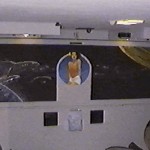
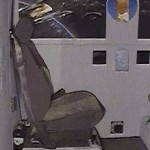
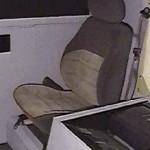
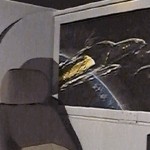
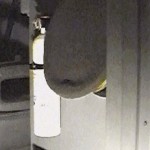
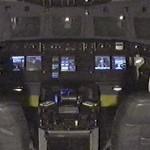
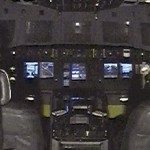
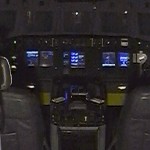
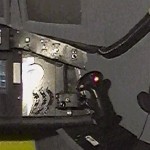
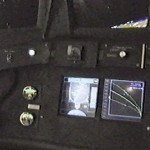
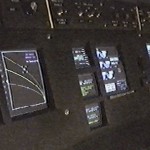
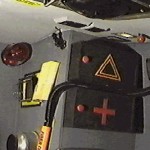
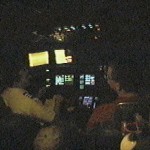
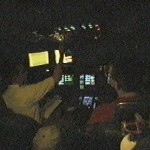
    1) New pictures – The cockpit has really changed so much, most of the panels are backlit now and the flight controls have been completely replaced and reinstalled in a sidestick configuration (similar to the Airbus(tm) series of commercial airliners).

    2) Construction zones – The few areas that have been under construction for quite some time will be added. Primarily, we want to make our training manuals and specifications available over the Internet and possibly offer flights (as passengers and eventually train for flight crew positions) to the public.

  • Berth Instructions

    INSTRUCTIONS

    FOR USE WITH Berth, Retractable

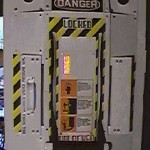
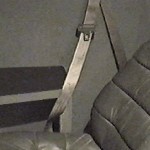
    USDC regulations (81.15) require use of restrainment devices during      docking/undocking procedures, dustoff and planetfall                 operations, or any other time indicated by the flight crew.

    USDC regulations (955.9) require all occupants to have seats   available.  If berthing is to be used, the maximum cabin            occupant capacity falls rom five to four occupants.

    Procedure listed is for extension.

    Follow procedure in reverse order for retraction.


    1. Remove beverages and retract beverage holders

    2. Slide passenger chairs to full forward position

    3. Remove chair headrests and securely stow

    4. Fold chairs to position one notch away from wall

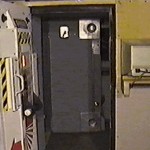
    5. Unlock latch and gently guide the berth down

    6. Ingress using overhead handles and chair as step


  • Assembly Code

    My friend Bryan Ball wrote this back in 1998/1999.  The motion control was solenoid-based and used PWM from a Motorola board to control the airflow.

    https://unistellar.risetvp.com/wp-content/uploads/2013/12/SKMBT_36113121616380.pdf

  • Wednesday, December 30, 1998

    Ian Lambert and Jason Reskin went on a test flight today which was the first to test the velocity computer. Needless to say there are some bugs to work out, but a major hardware problem was corrected in the process. Work continues on the motion control system. The valves have all been replaced to support a better exhaust gas handling system. Bryan Ball, the other Comp. Sci. major was over on Monday from 10:40a to 5:00p working on the assembly program for the Motorola. He should be back tomorrow to finish the program and start running tests. Words can not describe the awesome power required to move something this size and weight around like a rag doll, and I hope we all take it slow to make sure there are no accidents to us or the equipment. Bryan Ball’s short biography will be added to “Meet the Crew” as soon as his pictures come back. Ian Lambert informed us that his video camera should be fixed soon and we will conduct a documentary of the new crew rest area and the changes that have been done to the cockpit. Many stills will be updated on this site and we may make the tape available for the public if you pay for shipping. It was also discussed to put it in a AVI or MOV format. If there is someone interested in these or has other ideas, please let one of us know. Talk to you all next year!

  • Monday, December 21, 1998

    Work has begun on allowing the computers to control physical movement of the ship to simulate varous effects of turbulance, translational accelleration, and the normal flight orientations of pitch, roll, and yaw. This is being done with a system of pneumatic pistons that are controlled by a Motorola M68HC11 processor. It is a slow process and we are behind schedule from where we would like to have been at this point. Mr. Reskin is on a break for Christmas from his studies in college, so much of the catchup will be done by him. There was one test flight conducted on the 13th which included Mr. Tripp’s father Richard on his introductory flight. Since that test flight, another microprocessor was added to handle all the velocity information and velocity dependent sound effects. Work will continue through the holidays and we hope to get a few test flights in. Have a Merry Christmas and a Happy New Year!

  • Monday, November 23, 1998

    Jason completed his multi-engine add-on checkride today with the FAA and passed. The crew rest and transition area was finished yesterday and pictures should be available in an area that is currently marked under construction in the future. We reverted back to the old thrust control method with some new little perks relating to partial thrust availability when redirected for reversers as well as better sound effects than before. This week during Thanksgiving, Bryan Ball will be assisting us with a Motorola product that will control pneumatic pistons to move the simulator. Everyone is anxious to see that done, another first for us. Bryan is a valued member of the crew and flew as recently as Saturday. A brief biography and e-mail contact will be made available in the “Meet the Crew” section during his visit.