Blog
-
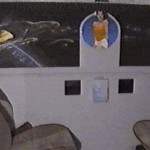
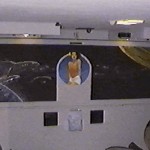
Berth Instructions
INSTRUCTIONS
FOR USE WITH Berth, Retractable
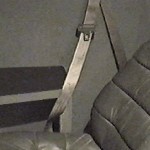
USDC regulations (81.15) require use of restrainment devices during docking/undocking procedures, dustoff and planetfall operations, or any other time indicated by the flight crew.
USDC regulations (955.9) require all occupants to have seats available. If berthing is to be used, the maximum cabin occupant capacity falls rom five to four occupants.
Procedure listed is for extension.
Follow procedure in reverse order for retraction.
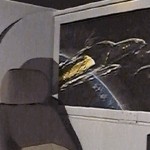
1. Remove beverages and retract beverage holders
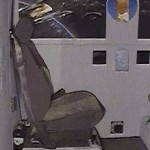
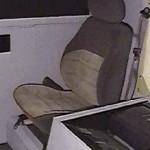
2. Slide passenger chairs to full forward position
3. Remove chair headrests and securely stow
4. Fold chairs to position one notch away from wall
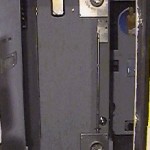
5. Unlock latch and gently guide the berth down
6. Ingress using overhead handles and chair as step
-
Assembly Code
My friend Bryan Ball wrote this back in 1998/1999. The motion control was solenoid-based and used PWM from a Motorola board to control the airflow.
https://unistellar.risetvp.com/wp-content/uploads/2013/12/SKMBT_36113121616380.pdf
-
Wednesday, December 30, 1998
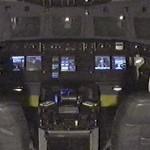
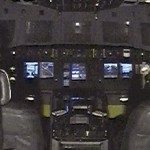
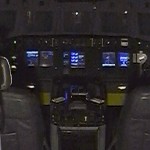
Ian Lambert and Jason Reskin went on a test flight today which was the first to test the velocity computer. Needless to say there are some bugs to work out, but a major hardware problem was corrected in the process. Work continues on the motion control system. The valves have all been replaced to support a better exhaust gas handling system. Bryan Ball, the other Comp. Sci. major was over on Monday from 10:40a to 5:00p working on the assembly program for the Motorola. He should be back tomorrow to finish the program and start running tests. Words can not describe the awesome power required to move something this size and weight around like a rag doll, and I hope we all take it slow to make sure there are no accidents to us or the equipment. Bryan Ball’s short biography will be added to “Meet the Crew” as soon as his pictures come back. Ian Lambert informed us that his video camera should be fixed soon and we will conduct a documentary of the new crew rest area and the changes that have been done to the cockpit. Many stills will be updated on this site and we may make the tape available for the public if you pay for shipping. It was also discussed to put it in a AVI or MOV format. If there is someone interested in these or has other ideas, please let one of us know. Talk to you all next year!
-
Monday, December 21, 1998
Work has begun on allowing the computers to control physical movement of the ship to simulate varous effects of turbulance, translational accelleration, and the normal flight orientations of pitch, roll, and yaw. This is being done with a system of pneumatic pistons that are controlled by a Motorola M68HC11 processor. It is a slow process and we are behind schedule from where we would like to have been at this point. Mr. Reskin is on a break for Christmas from his studies in college, so much of the catchup will be done by him. There was one test flight conducted on the 13th which included Mr. Tripp’s father Richard on his introductory flight. Since that test flight, another microprocessor was added to handle all the velocity information and velocity dependent sound effects. Work will continue through the holidays and we hope to get a few test flights in. Have a Merry Christmas and a Happy New Year!
-
Monday, November 23, 1998
Jason completed his multi-engine add-on checkride today with the FAA and passed. The crew rest and transition area was finished yesterday and pictures should be available in an area that is currently marked under construction in the future. We reverted back to the old thrust control method with some new little perks relating to partial thrust availability when redirected for reversers as well as better sound effects than before. This week during Thanksgiving, Bryan Ball will be assisting us with a Motorola product that will control pneumatic pistons to move the simulator. Everyone is anxious to see that done, another first for us. Bryan is a valued member of the crew and flew as recently as Saturday. A brief biography and e-mail contact will be made available in the “Meet the Crew” section during his visit.
-
Saturday, October 31, 1998
Happy Halloween! We took a successful test flight (Ian Lambert and Jason Reskin) and made a few decisions. The new accelleration method, although it has its advantages and is more realistic, has been deemed too difficult to operate with our current navigational information. During this week of programming, the code will be reverted. Additionally, five 100mhz Pentium computers have been ordered to replace the front view screen machines. This came about after the old 100mhz Pentium that used to run the dockmaster’s station was upgraded and the previous motherboard was installed in the new crew rest area. While testing it, it was apparent that our speed problems were not the fault of the texture mapping routine as much as the fault of the old 486 processors. A problem that has been plauging the dockmaster station for more than a month was identified as a new PCI network card that had a full-duplex mode enabled on it which was undetectable unless there was a high traffic situation on the network (during flights). We were also added to the Cape Canaveral Webring (see links) this weekend, so our traffic to this site should increase (we can only hope!).
-
Friday, October 23, 1998
Our apologies for not keeping the current events up to date. Everyone has been busy working on the crew rest area addition and programming. There is a delay with implementing tactical AI on the dock program due to a literal string overload on the DGROUP for Borland C++. There was no test flight performed last weekend, but the previous weekend worked rather well. Andrea Simar was our guest of honor for that flight in which she served as an understudy first officer. We were able to find network surge protectors to eliminate the possibility of lightening shutting us down for weeks at a time as has happened since the last update. If you would like information on that, please contact one of us under “Meet the Crew”. We are getting close to creating a motion platform, and the company we are working with should be in contact with us within the week. The crew rest area is liable to be finished within a week or so. Some additions and changes will then be made to the cockpit and the construction inside the simulator will cease for a while. The universe was given a once over as well. Several of the ship maps were changed and a few texture maps were added that were made a few weeks back but never implemented. An effort will be made (now that we have a registered version of our web page creator software) to add the new areas that have been under construction for an extended period as well as keeping the other areas maintained.